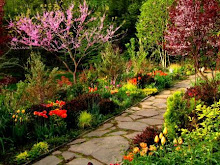
The snow and ice are starting to melt but signs of spring are still a bit hard to find. But down in the basement, my subterranean garden is happily waiting out winter's worst. There huddle many of my tender treasures, my agaves and bomeliads, my abutilons, begonias, plumbagos, fuschias, and cestrums --like 'Orange Peel' pictured (yep, it's flowering down there). Basically, it's whatever I can stuff down there that has a chance of surviving. I've got three areas--two cool ones--temps 40s to 50s--one with light and one without, and a warm spot--low 60s--with lights. I recently switched from using an energy pig of a high-intensity discharge light to using 1/2-inch florescents, which use even less energy than regular florescents. And guess what? The low-cost lights are working better than the pricey ones did. All the lights are on a timer for 18 hour days.


I go all out in container gardening once the season rolls around and these are my secret weapons, wintered-over plants that give me lots of material for cuttings and lots of plus-sized plants for dramatic display. It's also amazing how many tropical shrubs -as well as bulbs, tubers, and rhizomes--can wait it out in the dark and dry in a state of totally dormancy. And as they sit patiently, the plants always manage to remind me that--no matter how interminable winter may seem--spring is also a state of mind. One I can even nurture under ground.

 The snow and ice are starting to melt but signs of spring are still a bit hard to find. But down in the basement, my subterranean garden is happily waiting out winter's worst. There huddle many of my tender treasures, my agaves and bomeliads, my abutilons, begonias, plumbagos, fuschias, and cestrums --like 'Orange Peel' pictured (yep, it's flowering down there). Basically, it's whatever I can stuff down there that has a chance of surviving. I've got three areas--two cool ones--temps 40s to 50s--one with light and one without, and a warm spot--low 60s--with lights. I recently switched from using an energy pig of a high-intensity discharge light to using 1/2-inch florescents, which use even less energy than regular florescents. And guess what? The low-cost lights are working better than the pricey ones did. All the lights are on a timer for 18 hour days.
 I go all out in container gardening once the season rolls around and these are my secret weapons, wintered-over plants that give me lots of material for cuttings and lots of plus-sized plants for dramatic display. It's also amazing how many tropical shrubs -as well as bulbs, tubers, and rhizomes--can wait it out in the dark and dry in a state of totally dormancy. And as they sit patiently, the plants always manage to remind me that--no matter how interminable winter may seem--spring is also a state of mind. One I can even nurture under ground.